Industry and science join forces: DOK-ING, ENT, FER and FSB signed an agreement for the development of next-generation unmanned systems
March 12, 2026
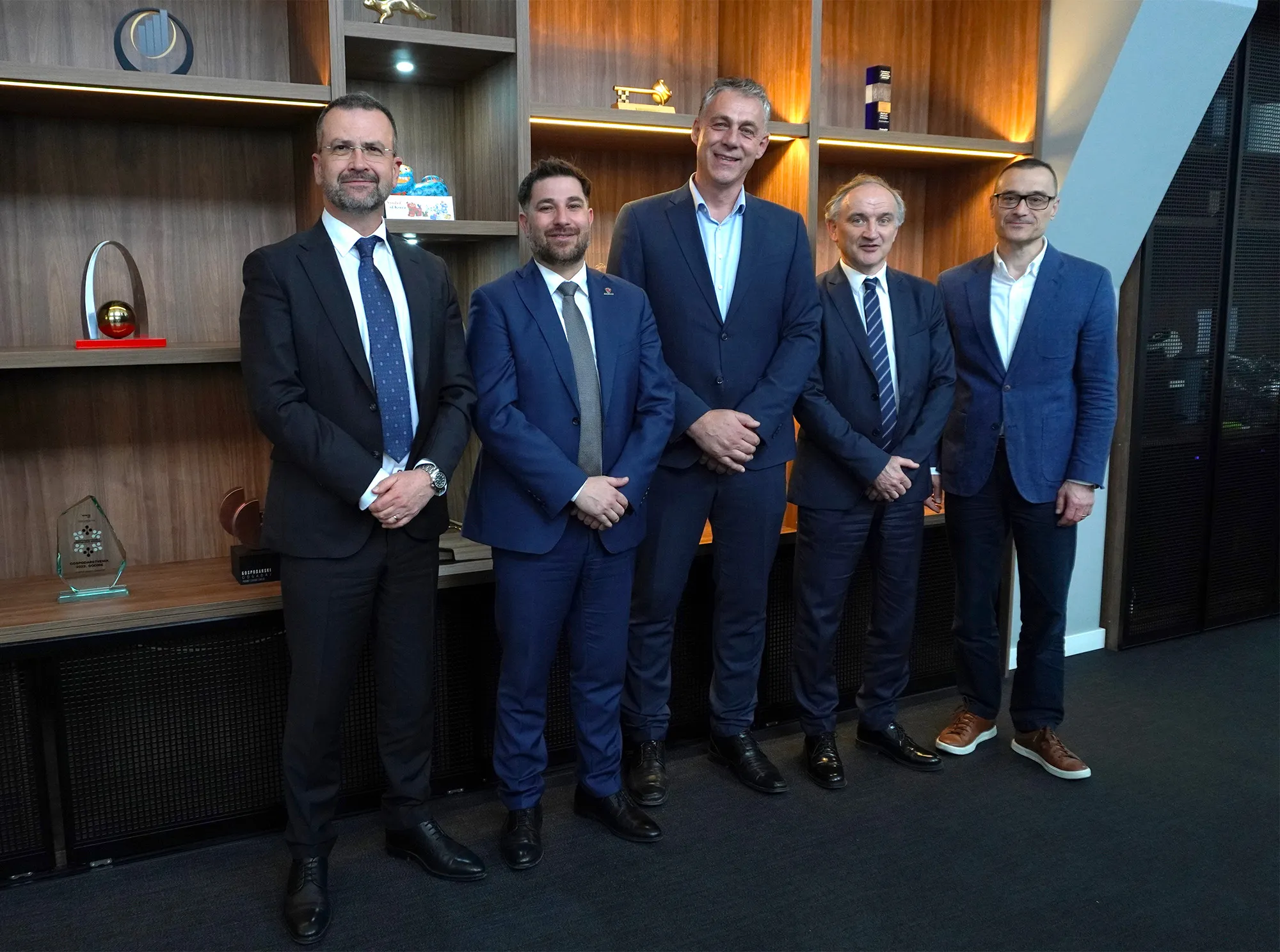
A new partnership between industry and the academic community focused on the development of robotics, autonomous systems and advanced digital technologies
Croatian high‑tech companies DOK-ING and Ericsson Nikola Tesla (ENT), together with two leading scientific-research academic institutions, the Faculty of Electrical Engineering and Computing (FER) and the Faculty of Mechanical Engineering and Naval Architecture have signed a cooperation agreement aimed at developing next‑generation unmanned systems and advanced robotic systems. The agreement on strong cooperation between science and Croatian industry is a prerequisite for establishing collaboration based on the triple helix model.
The agreement defines the framework for the exchange of knowledge, research capacities and technological competencies between industry and the academic community and opens the space for joint development and research projects in the field of robotics, autonomous systems and digital technologies.
Industry and science as drivers of technological innovation
Within this partnership, DOK-ING will act as the leading industrial partner, while Ericsson Nikola Tesla will contribute with its expertise in the field of communication and digital technologies. Academic partners: The Faculty of Electrical Engineering and Computing and the Faculty of Mechanical Engineering and Naval Architecture will participate in the research and development of key technological components, including autonomous systems, mechatronics, artificial intelligence and advanced engineering systems. The goal of this cooperation is to connect the industrial experience and development capacities of the private sector with the research potential of Croatian technical faculties, in order to accelerate the development of new technologies.
The signatories of the agreement emphasize that the aim of this initiative is to create, in the long term, a strong industrial‑scientific ecosystem in Croatia, encourage the development of advanced technologies and further strengthen the position of domestic industry in the field of robotics, autonomous systems and digital solutions.
“Developing complex technological systems today is almost impossible without strong ties between industry and the scientific community. This is precisely why we consider this model of cooperation extremely important for the long‑term development of domestic industry and the creation of new technologies,” said Ante Bakić, CTO at DOK‑ING.
“DOK-ING has long maintained cooperation with the faculties of the University of Zagreb, and I would also like to highlight the importance of cooperation with ENT. With this agreement, we aim to establish a systematic approach to cooperation with the Faculty of Electrical Engineering and Computing and the Faculty of Mechanical Engineering and Naval Architecture, which will help us in researching and applying new technologies to the robotic systems we are developing. In this way, knowledge from the academic environment is more quickly transformed into concrete technological solutions, and industry gains access to the latest research and the talents involved in the development of advanced systems. Such partnerships create the foundations for the development of new technologies that can be competitive on the global market,” added Bakić.
Hrvoje Benčić, member of the Management Board of Ericsson Nikola Tesla, emphasized: “Academic excellence combined with extensive industrial experience provides a strong basis for launching new research initiatives and developing technologies that can shape the future directions of industry. Such projects strengthen not only individual ideas and results, but also the overall intellectual capacity of the country, raising the level of expertise and creating the foundations for long-term technological progress.”
“Cooperation between faculties and strong strategic partners, in addition to being key for the development of advanced technological solutions, enables the definition of long-term research directions that also open opportunities for long-term career development of scientists. By directing research towards the needs of the economy, the competencies of engineers in the industry are strengthened, as well as the professional knowledge of researchers at the faculty, thereby further enhancing the research, teaching and innovation potential of the faculty. In this way, a strong innovation environment is created that connects scientific excellence, industrial needs and the development of new technologies, contributing to strengthening the competitiveness of the Croatian economy and its long-term technological development,” emphasized Prof. Zdenko Tonković, PhD, Dean of the Faculty of Mechanical Engineering and Naval Architecture of the University of Zagreb.
“FER has successful and long-standing cooperation with all the partners in this initiative. Together we represent a force that gives new momentum to research excellence and technological progress in Croatia. We look forward to the opportunities this cooperation offers for the development of the careers of new technological experts and leaders,” said Prof. Vedran Bilas, PhD, Dean of the Faculty of Electrical Engineering and Computing in Zagreb.
Triple helix model as the foundation of technological development
The concept of the triple helix model implies close cooperation between industry, scientific-research institutions and public administration in the development of new technologies.
Such a model has in recent decades become one of the key drivers of technological innovation in the world’s most developed economies, as it enables faster transfer of knowledge from research institutions into industrial application.