ENT Solutions Presented at the 8th Croatian Congress on Cadastre
May 18, 2026
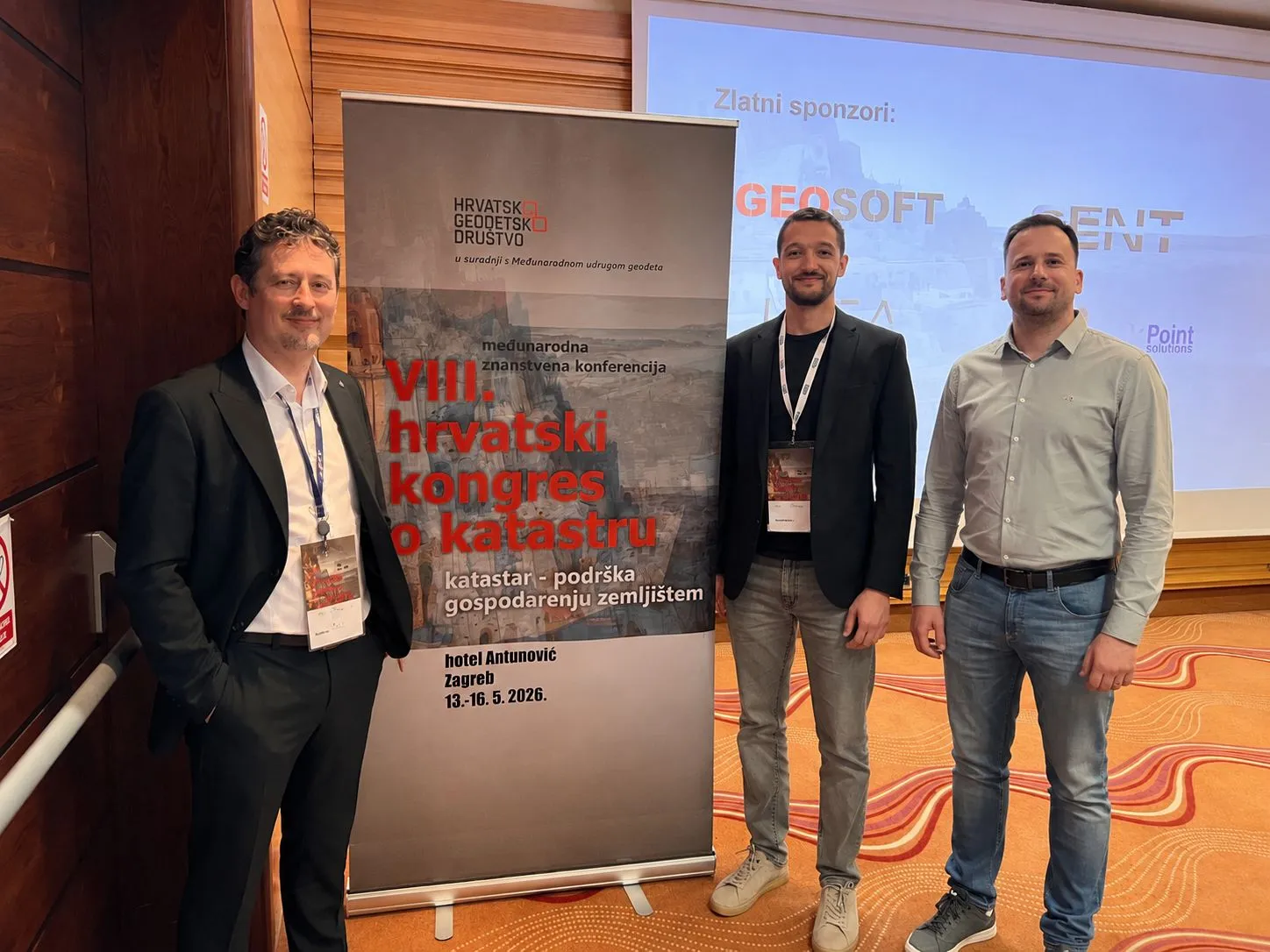
Ilija Ćaćić, Ivo Pažanin, Grgo Dželalija (Photo from the Organiser’s archive)
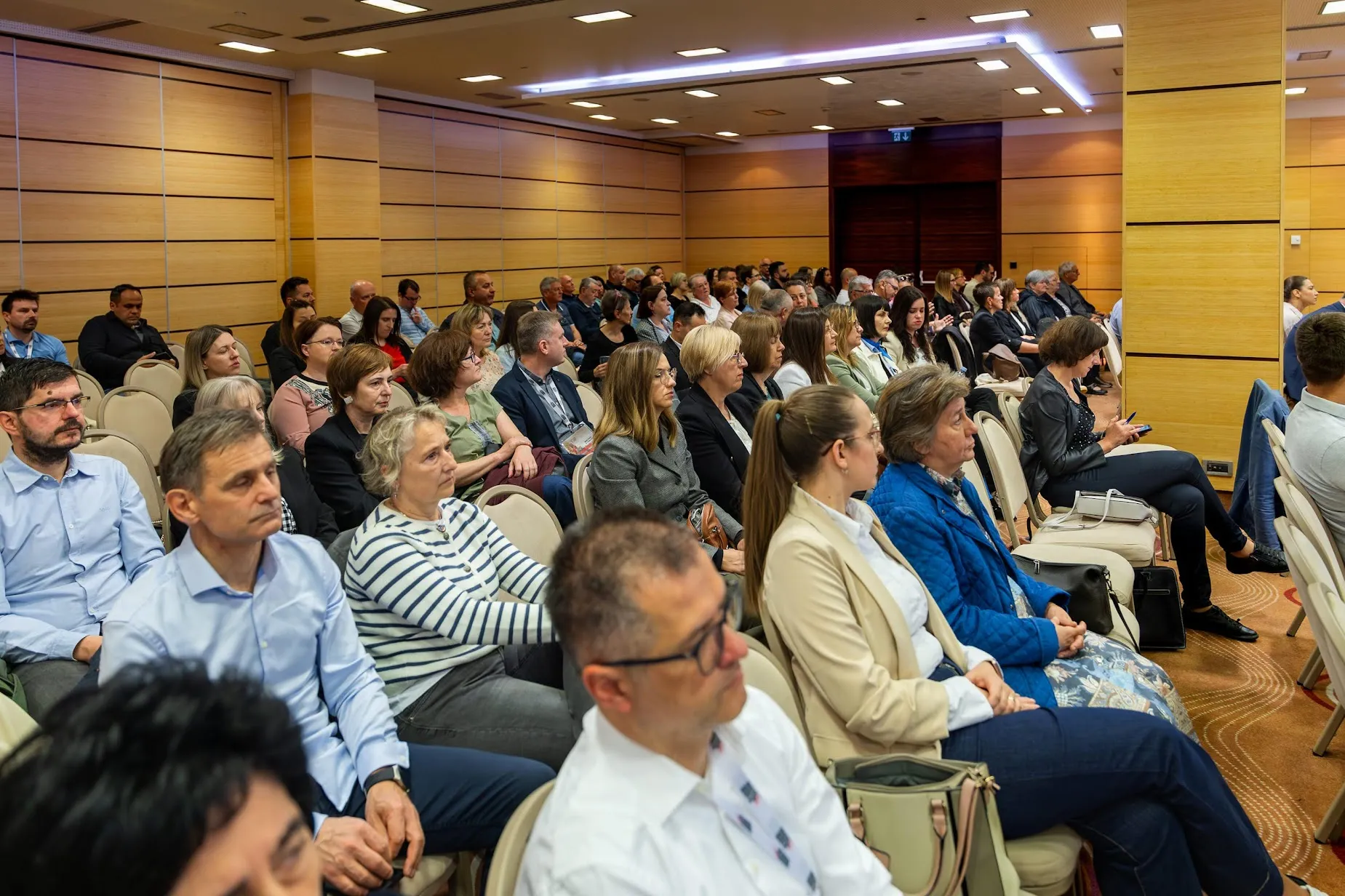
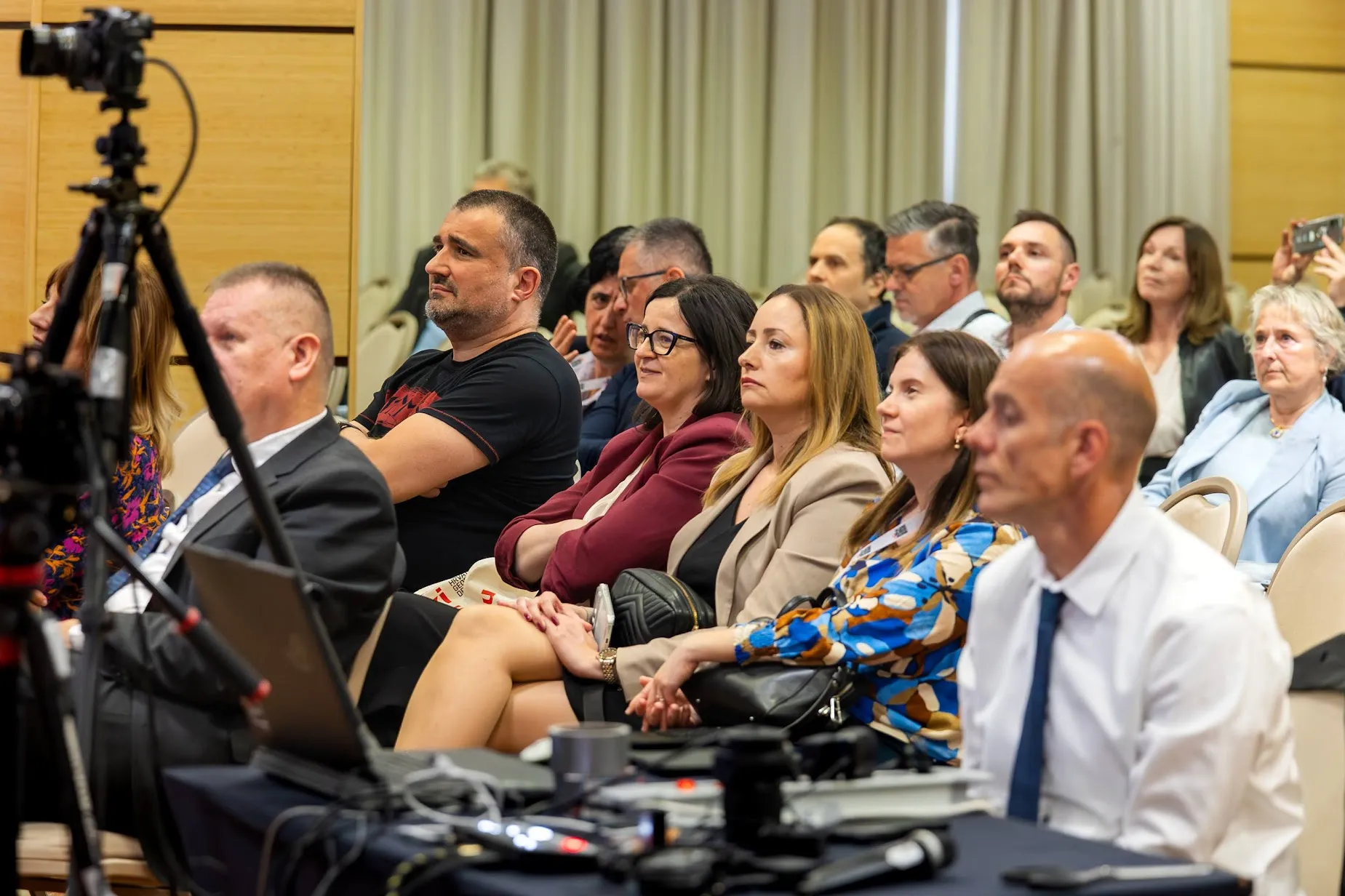
At the 8th Croatian Congress on Cadastre, “Cadastre – Supporting Land Management”, an international scientific conference that brought together numerous experts in the field, ENT presented its advanced technological solutions and experience from cadastral and land registry modernization projects through three expert presentations.
The Congress, held in Zagreb from 13–15 May under the auspices of the Ministry of Physical Planning, Construction and State Assets and the State Geodetic Administration, was organized by the Croatian Geodetic Society in cooperation with the Croatian Chamber of Chartered Geodetic Engineers, the Faculty of Geodesy of the University of Zagreb and the International Federation of Surveyors (FIG).
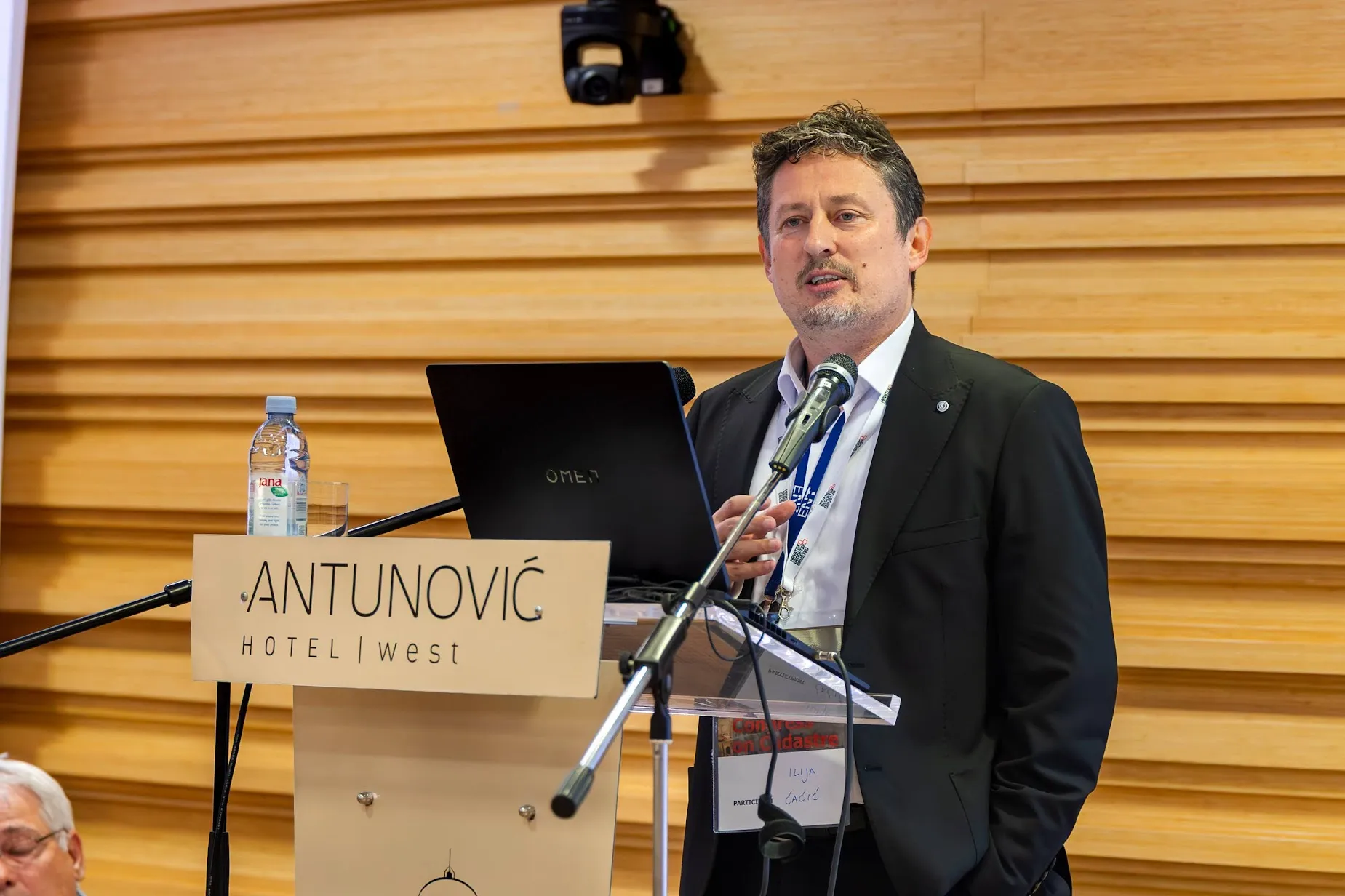
Ilija Ćaćić (Photo from the Organiser’s archive)
Since late 2024, Ericsson Nikola Tesla has been engaged in a five‑year project to modernize the land registry and cadastral systems of the Republic of Cyprus. This project formed the basis for the paper Automated Document Processing and Data Structuring within the Modernization of Land Registry and Cadastral Systems in the Republic of Cyprus, by authors Marinko Požega, Ivo Stojan, Ilija Ćaćić and Jelena Jurišić.The paper presented the application of automation in document processing and the creation of high‑quality structured datasets. It demonstrated how automated document processing and data structuring are becoming key prerequisites for standardized and measurable case processing, and it explored the potential integration of large language models (LLMs) to further enhance document processing. The authors also highlighted the long‑term strategic direction toward a data‑first portal, in which standard requests are submitted in structured form, while documents gradually become exceptions or supporting evidence.
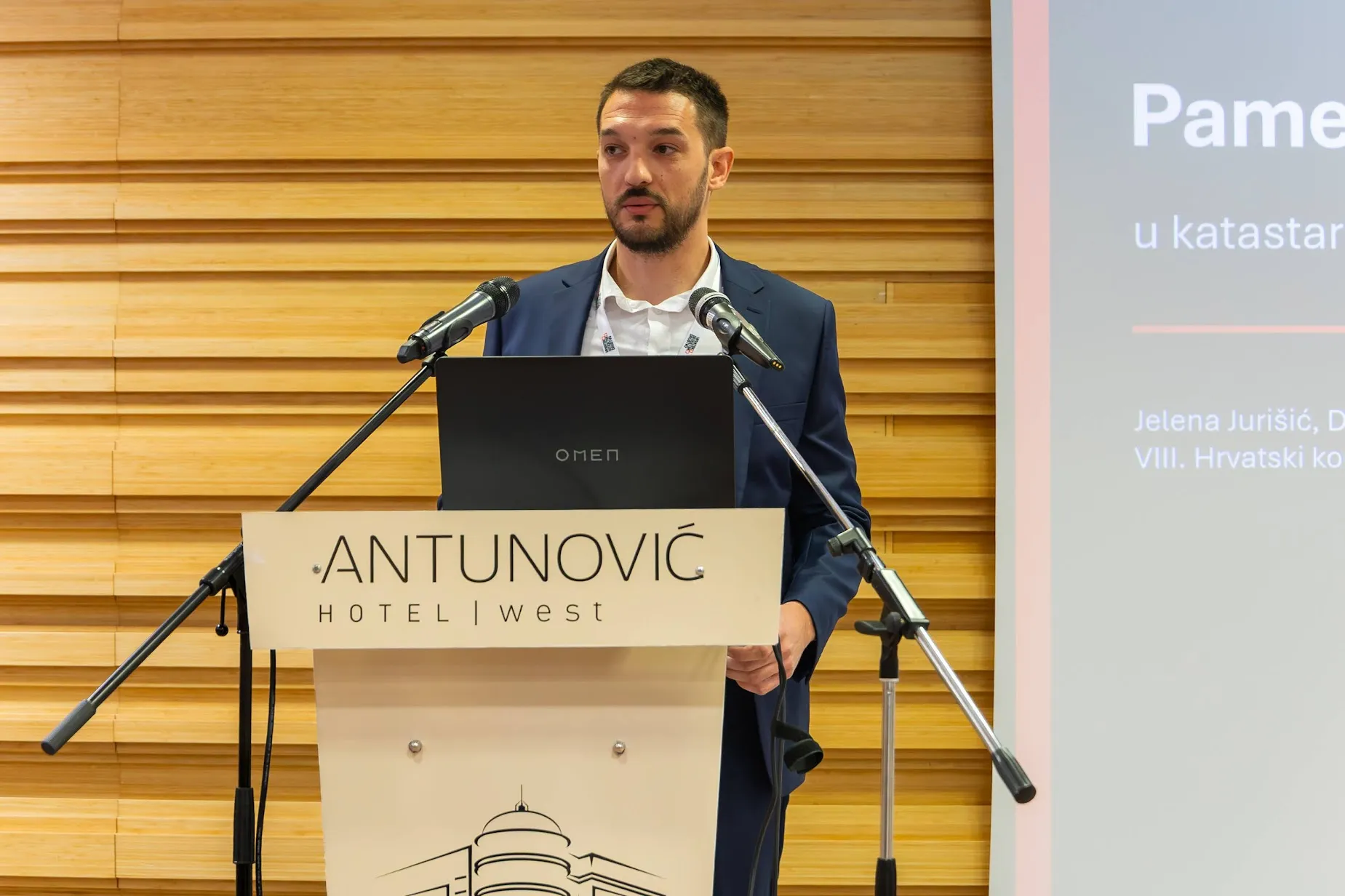
Ivo Pažanin (Photo from the Organiser’s archive)
With the development of artificial intelligence, particularly large language models, new opportunities are emerging to support officials through so‑called smart clerks, assistive systems designed to support, rather than replace, human decision‑making. Such systems can automatically analyze incoming documents, extract relevant data, identify formal and material deficiencies, compare information from various sources (land registry, cadastre, contracts) and generate structured summaries and checklists for further case processing. These topics were further explored in the paper Smart Clerk in Cadastral and Land Registry Procedures in the Republic of Croatia, by authors Ivo Pažanin, Damir Robić, Josip Šimić and Jelena Jurišić. The paper demonstrated how digital assistants and automated workflows can accelerate procedures, reduce administrative burden and increase consistency in case handling. It analyzed the current state of digital case processing, identified key challenges and examined the possibilities and limitations of applying artificial intelligence to improve efficiency, legal certainty and procedural consistency, while maintaining full control and responsibility of the competent official.
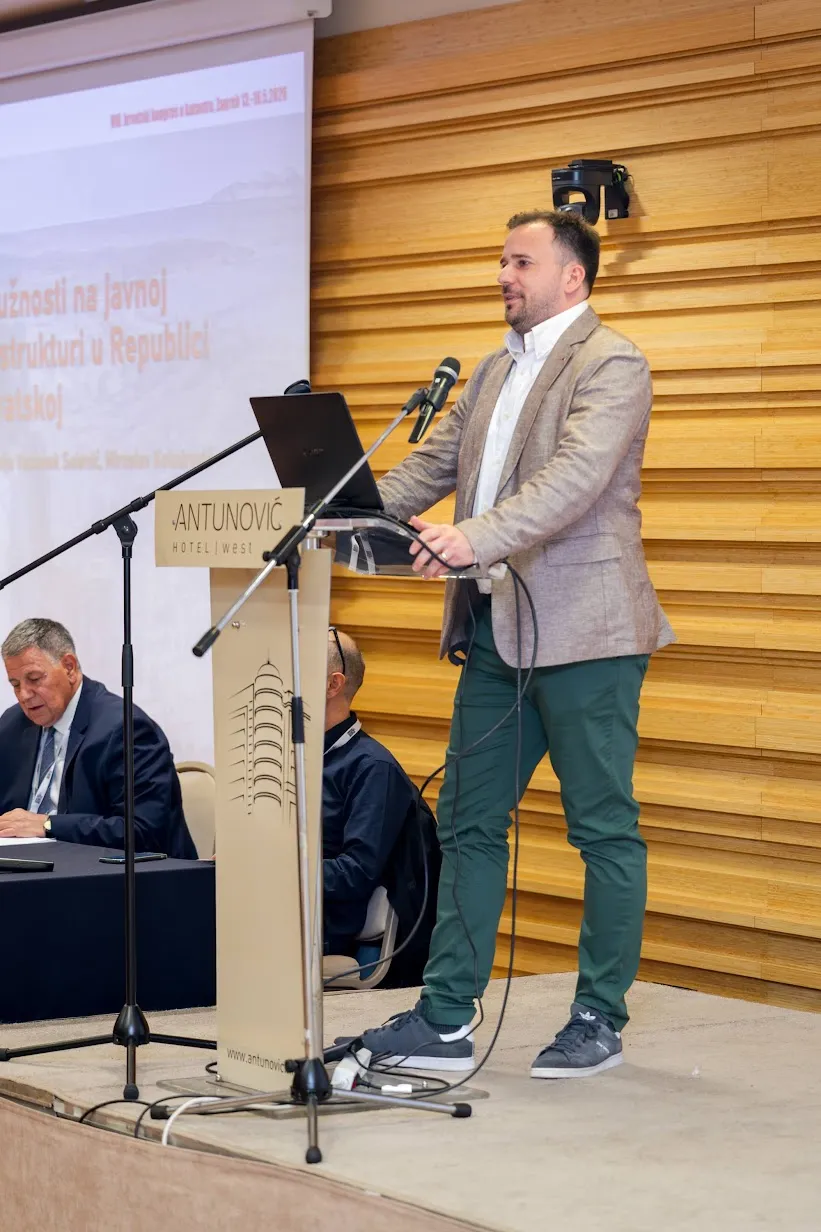
Grgo Dželalija (Photo from the Organiser’s archive)
Although public utility infrastructure is a crucial component of societal functioning, its comprehensive, consistent and complete recording within land management systems remains a challenge. As a result, the management of public utility infrastructure is becoming an increasingly relevant topic globally, especially in highly urbanized and developed countries. Advances in technologies for collecting and processing spatial data, together with international standards such as LADM and the concepts of 3D and 4D cadastre, are creating opportunities for comprehensive registration of utility infrastructure, including its physical, legal and spatial characteristics. This also enables the registration of ownership rights over infrastructure, as well as easements based on precise geometry. Such an approach simplifies processes, improves data maintenance and enhances legal certainty. These opportunities enabled by modern technology were the focus of the paper Registration of Easement Rights on Public Utility Infrastructure in the Republic of Croatia, by authors Grgo Dželalija, Dominik Miletić, Sanja Vaclavek Selenić and Miroslav Koludrović. The authors emphasized the importance of harmonized recording of rights and infrastructure, as well as the practical integration of cadastral and land registry data.
By participating in this Congress, ENT reaffirmed its leading role in developing advanced solutions for the digital transformation of land management systems, building on more than two decades of innovative use of technology to create specialized domain solutions that enable a digital society. The solutions ENT presented, from automated document processing and the smart clerk concept to the registration of easement rights, contribute to higher‑quality data, more efficient procedures and improved interoperability of cadastral and land registry systems.
Photo from the Organiser’s archive: